The weekly roundup: 🐝 Superhighways for nature
From suburban nature strips to circular fashion, this week's stories find solutions growing in overlooked spaces.



Somewhere between the footpath and the kerb lies one of Australia's most underused ecological assets.
Nature strips – those narrow slivers of council land lining millions of suburban streets – could, if planted with natives, form unbroken pollinator corridors across entire cities. This week we spoke to campaigner Clancy Lester, who made that case in a way the internet immediately loved.
Also this week: Australian startups proving that fashion's enormous waste problem has a material solution.
Rewilding the kerb
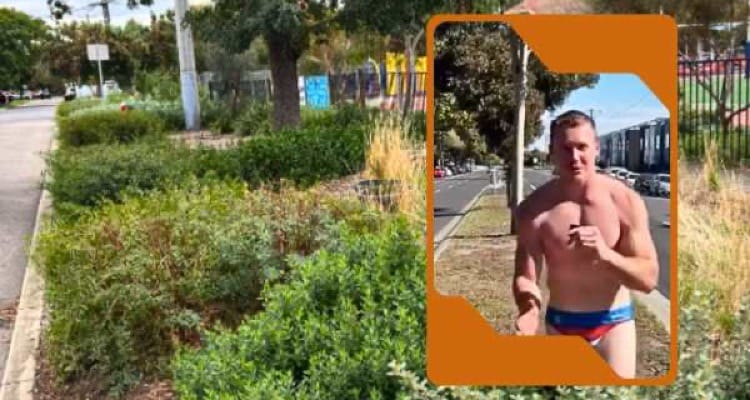
Australia's nature strips cover more than a third of urban public green space – and most of that land is bare lawn.
Environmental advocate Clancy Lester, named an ABC Trailblazer in 2025 for his work educating the public about bee habitats, recently went viral with a campaign to replace roadside monocultures with corridors of native plants. Connected strips, he argues, can establish ecological pathways that support pollinator diversity – the insects that play an essential role in food production and ecosystem health.
Threads of change
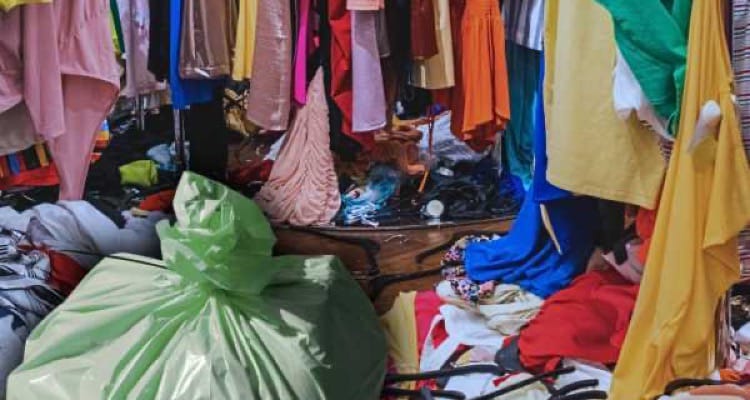
Australians are chucking out around 220,000 tonnes of clothing each year.
A cluster of local startups is building the infrastructure that they hope will close the loop on this huge waste problem by enzymatically recycling nylon, deploying waterless dyeing systems, and repurposing post-consumer denim into high-performance building insulation. And underpinning these efforts is Seamless, Australia's national clothing stewardship scheme, with bold ambitions to see 60 per cent of end-of-life clothing diverted from landfill by 2027.

▷EV charging for apartments
A Sydney-based startup has secured $1.51 million from the Australian Renewable Energy Agency to roll out affordable electric vehicle charging across strata buildings nationally. ReadySteadyPlug's pay-as-you-go platform uses standard power outlets combined with smartphone access control, cloud-based metering and automated billing – avoiding the switchboard upgrades and high upfront costs that have historically made EV charging impractical in apartment complexes.
▷ Second life for solar panels
Australia's first research hub dedicated to recycling end-of-life solar panels has opened at UNSW Sydney, backed by a $5 million grant from the Australian Research Council. With photovoltaic waste projected to reach 100,000 tonnes annually by 2030, the hub's researchers are working to recover valuable materials, including glass, silicon, silver and copper, and develop better separation technologies and panel designs that are easier to disassemble.
▷Moreton Bay innovation challenge
City of Moreton Bay has been selected as one of only two cities worldwide – alongside Rome – to partner with the Tokyo Metropolitan Government on a major open innovation challenge focused on disaster resilience and asset management technologies. Five Japanese startup finalists will travel to Australia in August, with one selected to deliver a fully funded proof of concept working directly with the City later this year.
▷Lessons on food security
A rooftop hydroponic greenhouse at Alexandria Park Community School in inner-city Sydney has produced its first harvest, funded by the City of Sydney as part of not-for-profit Food Ladder's push to build localised food systems in schools. The solar-powered, climate-controlled unit was created to grow produce year-round without soil, pests or reliance on external supply chains. Food Ladder says it has already partnered with 52 schools nationally, growing 7.3 tonnes of fresh produce annually.
▪️The Zero Planet is an independent Australian news site focusing on climate-friendly innovation. Follow us on LinkedIn and Instagram.