Nature ‘strip’ inspires urban rewilding
A significant and largely untapped opportunity to create pollinator corridors has been hiding in plain sight, says Aussie bee campaigner.

An unconventional campaign to turn barren nature strips into thriving ecosystems is gaining momentum, inspiring residents around the country.
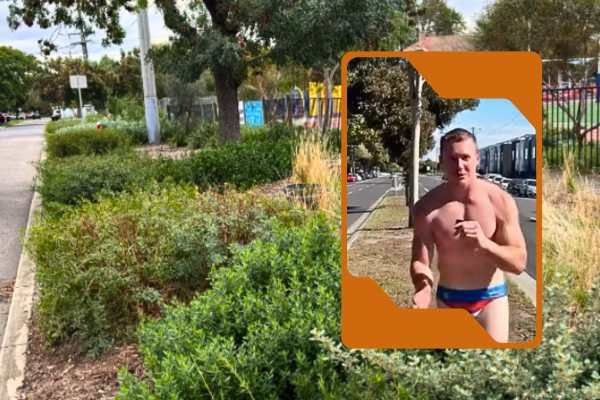
Environmental advocate Clancy Lester first drew attention to the misuse of nature strips – the sliver of council land between footpath and kerb – by posting a video of himself sunbathing on a sparsely vegetated median strip (see inset photo).
He didn’t just attract the attention of local law enforcement, who were concerned for his safety. Some Australian media outlets also jumped on the story, propelling neglected nature strips into the national spotlight.
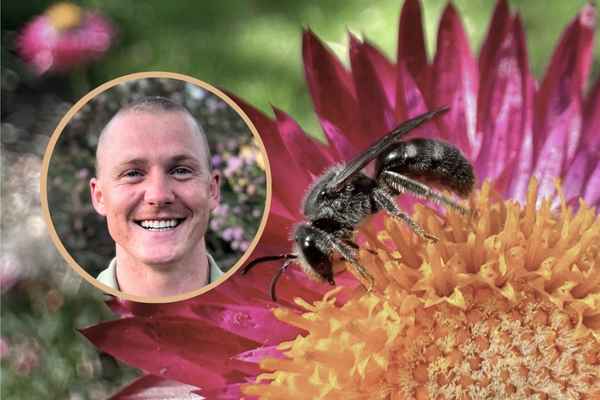
Lester, also known as The Bee Man, was named an ABC Trailblazer in 2025 for his work educating people about bee habitats through educational workshops.
With more than a third of the public green spaces in urban areas designated as nature strips, he is calling for corridors of native plants to replace the typical lawn monoculture to restore ecosystems for pollinators, which play an essential role in food production and ecosystem health.
"I know there are people that have been inspired to take action because they have been sending me photos of the native plants they’ve planted in their nature strips."
Lester said that since his campaign went viral, the public response had been very positive.
“I know there are people that have been inspired to take action because they have been sending me photos of the native plants they’ve planted in their nature strips.
“On the advocacy side of things, I've had people send emails asking me to look over draft motions to raise with their council or tell me that they’re going to speak at a local council meeting. These are the types of actions that can lead to policy changes in the long term.”
As part of his work as an environmental advocate, Lester has also produced a documentary called 7Seasons that explores the link between local seasons and the shifting climate, tapping into First Nations knowledge.
Last week Lester was granted a sponsored parliamentary pass by Senator David Pocock to help him extend his nature and youth advocacy to the corridors of power.
Urban evolution
Lester said that nature strips represented a significant and largely untapped opportunity for urban rewilding. Connected strips can establish ecological corridors that support pollinator diversity, he said.
“The biggest predictor of bee diversity in a study on urban green spaces was their connectivity to other green spaces," Lester said. "This is because most native insects don’t forage long distances from where they nest and require habitats to be joined up to move around urban spaces.”
Pollinator districts are an emerging feature of urban developments in the US. In Colorado, a high-density neighbourhood in Broomfield has become the world's first suburban development built around protecting bees and butterflies, as recently reported in the Colorado Sun.
Closer to home, a Melbourne Pollinator Corridor aims to establish 200 gardens across eight kilometres of inner-city public land, targeting overlooked urban spaces with the goal of connecting isolated green patches into a continuous habitat corridor for native pollinators.
Another initiative is the Save Our Bees pilot program being run by Transport for NSW which is working to restore native bee populations on public transport land. Backed by research from Western Sydney University, it says it aims to turn everyday commuter spaces such as stations and stops into urban ecosystems.
Before reaching for a shovel, Lester advises working through these steps:
▫️First, confirm who owns the land. Nature strips fall under local council, state government or utility company jurisdiction, and planting on the wrong patch can create legal headaches.
▫️Check your council's guidelines as rules vary widely. Some councils prohibit modifications, others are indifferent, and some actively support residents with free plants, vouchers or subsidies. (The Shady Lanes Project website consolidates this information by state and council.)
▫️Once you have the all-clear, research appropriate plants. Council websites sometimes publish recommended species lists. Lester says the Wheen Bee Foundation also provides regional planting guides, or visit a local indigenous nursery (not a commercial garden centre) to source native plants suited to the local climate and ecology.
▫️To replace lawns, lay cardboard to suppress weeds, add a compost layer then plant selected natives, providing ongoing maintenance when needed.
▫️ Recruit your neighbours to start their own projects to create a pollinator corridor in your suburb.
Related stories
 Amanda Bryan
 Louisa Hearn