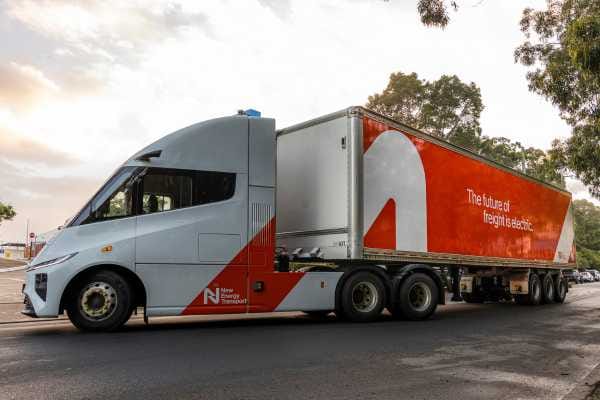
Trucking towards zero
A growing EV ecosystem is working to wean the country's diesel-dependent freight sector off imported fuel.

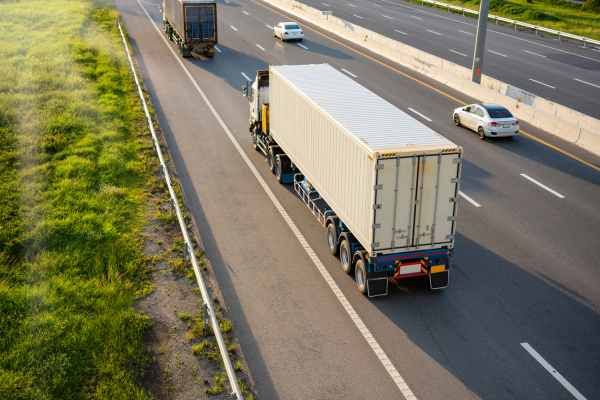
Diesel trucks in South Australia are set for a second life with the launch of a new conversion centre that will refit them with electric drivetrains.
The announcement comes as the freight sector grapples with recent fuel-price volatility and supply disruptions, prompting many operators to explore alternatives to fossil fuels.
Janus Electric said the new South Australian conversion centre, which will be run in partnership with Archer Heavy Equipment, will become its first dealer-led initiative as it seeks to expand its national capacity to convert diesel trucks to electric.
The ASX-listed company already runs a conversion centre at its headquarters in Fountaindale, NSW, and says it's also been expanding its operations into US and Canada.
"We’re seeing strong demand from the Adelaide carrier community to convert diesel trucks to electric. Operators can see the cost savings and the operational benefits, and many are ready to convert immediately."
Archer managing director Jared Archer said, “We’re seeing strong demand from the Adelaide carrier community to convert diesel trucks to electric. Operators can see the cost savings and the operational benefits, and many are ready to convert immediately.”
At the launch, Janus Electric will showcase a fully converted electric heavy vehicle powered by its swappable battery drivetrain platform. The company said the conversion centre aims to offer fleet operators a cheaper pathway than buying new electric trucks outright, with the South Australia launch part of a broader national push.
Janus Electric added that it was also in discussions with partners across Victoria, Queensland and Western Australia, with its dealer network expected to deliver conversion capacity of at least 250 trucks per year – establishing a foundation for the scaled electrification of Australia's heavy vehicle fleet.
Support from the top
Janus Electric CEO Ben Hutt said while demand was growing every day, government support would help operators already under pressure from energy costs make the switch.
“Targeted government incentives, aligned across federal and state levels, would accelerate uptake materially and get more electric trucks on the road, faster,” he said.
One current government initiative being run by the Australian Renewable Energy Agency (ARENA) is the ‘Driving the Nation’ program, which has prioritised the decarbonisation of heavy road transport.
The federal government has also recently launched a new Investor Front Door program, selecting four projects to participate – among them, a zero-emission heavy road freight depot being developed near Sydney by New Energy Transport (NET).
NET also made headlines recently by completing Australia's first all-electric 'end-to-end' freight delivery, running between Sydney and Canberra in partnership with last-mile delivery provider ANC and recycled toilet paper manufacturer Who Gives A Crap.
Call for action
Light transport has also been named as a key priority by ARENA, and last week a coalition of major EV industry operators and associations issued a joint statement urging governments to clear the path for private-sector charging infrastructure investment.
The group warned that EV adoption would only accelerate if charging infrastructure kept pace, backed by a clear policy framework to remove bottlenecks and unlock investment with transparent processes and efficient tariffs.
Transport represents "the next frontier" for Australians seeking to escape volatile energy costs following the rooftop solar boom, the EV coalition said, "but only if charging infrastructure keeps pace with demand".
The coalition also acknowledged the Victorian Government's recent commitment to removing barriers to a competitive EV market, while describing the NSW Government's newly announced EV Strategy as "a welcome initial step".
Second life for batteries
At the opposite end of the electric transport industry lies the circular reuse of electric car batteries – repurposing them to power homes, buildings and the grid once they are no longer suitable for vehicles.
The Electric Vehicle Council says while the market is still in its early days, with most EVs still relatively new, it expects significant economic opportunity in second-life applications to emerge over the coming decade.
In Victoria, Nissan has given nine end-of-life LEAF batteries a new purpose at its Dandenong casting plant.
Developed in partnership with Melbourne-based battery technology company Relectrify, the project – known as Nissan Node – pairs the repurposed batteries with a new 100 kW rooftop solar array. Nissan has estimated that the system could reduce the plant's annual CO2 emissions by 259 tonnes while saving 128 megawatts of energy every year.
To convert trucks, Janus Electric removes the diesel engine and replaces it with an electric powertrain connected to a network of modular, swappable batteries. When the truck's charge runs low on a route, the company says the depleted battery is exchanged for a fully charged one in minutes, eliminating the downtime associated with traditional charging. Every truck, battery and swap station feeds into a single software platform, giving fleet operators real-time visibility over battery use, performance and energy costs across the fleet.
Related news
 Louisa Hearn