The weekly roundup: ♻️Material jumpstart
In this week's news we look at moves to recover rare earth materials and a sustainable soy sauce solution.



This week we reported on two Australian startups tackling the problem of unsustainable materials from opposite ends of the product lifecycle.
One is seeking to recover value from materials after they have been discarded, the other is redesigning a disposable item so it never becomes waste in the first place.
Together, they reflect a broader shift in how materials innovation is being approached. Where larger industrial enterprises often address environmental concerns in incremental steps, these stories suggest that more fundamental shifts are coming from smaller ventures built around a sustainability mission from the outset.
Rare earth recovery

Australian startup Samsara Eco has announced plans to extend its operations into critical minerals recovery from electronic waste.
Its enzyme technology currently breaks down plastics into reusable materials and the company is now targeting rare earth elements – including neodymium and dysprosium used in high-performance magnets – which the company says represent a significant geopolitical supply-chain challenge.
A fishy twist
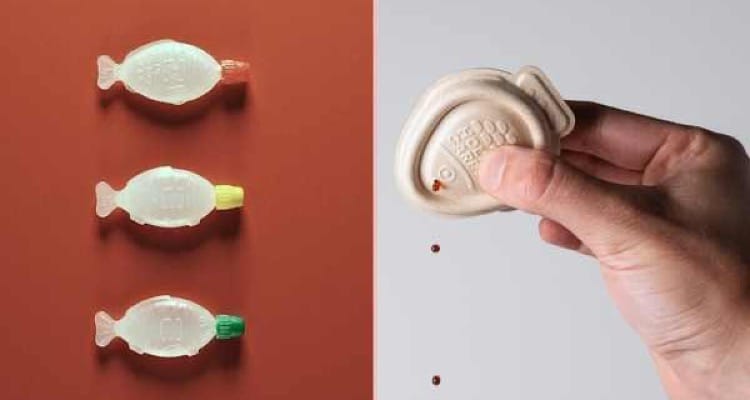
Sydney design company Heliograf has launched what it describes as the world's first compostable alternative to the single-use plastic soy sauce fish.
Commonly found in takeaway sushi packaging. Heliograf's Holy Carp! is made from sugarcane-derived plant fibre and is designed to break down in home composting conditions. Its debut venue is Sush Track on Hobart's waterfront. The launch coincides with growing regulatory pressure on single-use plastics across several Australian states.

▹Australia joins High Seas Treaty
Australia's Senate passed legislation this week enabling the country to ratify an international agreement to protect oceans beyond national waters. WWF Australia welcomed the move, noting the treaty would provide the tools to protect marine areas in international waters under growing pressure from destructive fishing, shipping, plastic pollution, potential deep sea mining and climate change. Australia joins around 90 countries that have already signed on.
▹Tassie-made electric ferries on show
King Frederik and Queen Mary of Denmark visited Incat Tasmania's Hobart shipyard last week to view construction of three 129-metre battery-electric ferries being built for Danish operator Molslinjen. Accompanied by Prime Minister Anthony Albanese, the royal visitors unveiled a commemorative plaque on Hull 102, the first of the three vessels that once complete, will operate between Jutland and Zealand in Denmark.
▹Robots take the heat in solar trial
CSIRO is trialling AI-powered robots to handle the dusty, boots-on-the-ground inspection and monitoring of Australia’s massive solar farms. These autonomous machines, which were originally designed for the mining sector, have been navigating thousands of kilometres of uneven terrain to inspect panels using LiDAR, RGB cameras and thermal sensors. It says the goal is to reduce the need for workers to perform hazardous manual inspections, lower operational costs, and stabilise energy output. CSIRO said it aims to partner with industry to make the tech more broadly available.
▹New national data centre guidelines released
The federal government has released national guidelines for data centres, requiring operators to prioritise the national interest, support the energy transition, and use water sustainably. The principles - Expectations of data centres and AI infrastructure developers - aim to align the resource-heavy industry with Australia’s economic and environmental targets. While welcoming the move, WWF-Australia expressed caution about the lack of enforceable rules, warning that a lack of federal and state mandates could put Australia’s climate and energy goals at risk.