The weekly roundup: 🗣facing the facts
As geopolitical conflict exposes the fragility of energy supply chains, crumbling information ecosystems are undermining renewable alternatives.



We are living in unsettling times. This week we explored how the information ecosystems that democracies depend upon have begun to erode informed public debate on climate and energy.
Last month's Senate's select committee report highlighted how this has disrupted Australia's journey toward renewable energy adoption – and now geopolitical conflict has exposed the fragility of traditional fuel supply chains.
In response, the government has moved to bolster support for startups driving the transition to more resilient energy infrastructure, including a proposed zero-emission freight depot south-west of Sydney.
This points to a broader opportunity: governments around the world can meet the moment by harnessing technology to respond to chaotic events, rather than allowing it to become a weapon against progress.
Climate's digital divide
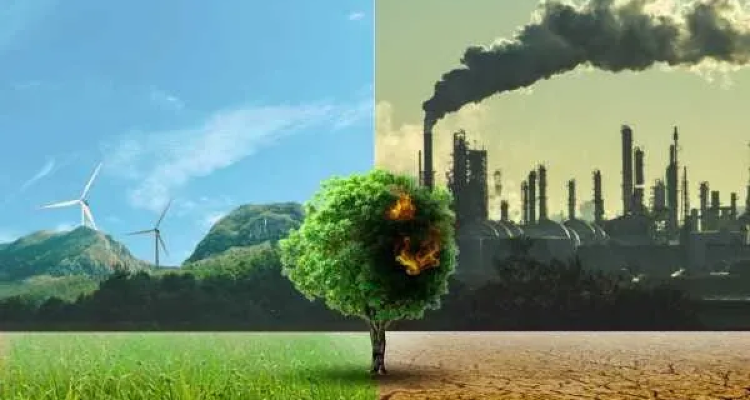
AI-fuelled misinformation is reshaping Australia's energy debate, and democracy may be the casualty.
A recent Australian Senate inquiry has found that climate and renewable energy misinformation, amplified by social media algorithms and increasingly sophisticated artificial intelligence tools, poses a significant threat to public policy and democratic processes. From blocked community batteries to bushfire survivor harassment, the real-world consequences are mounting. Regulators are examining options, including AI watermarking laws and strengthened powers for watchdogs, as current legislation continues to fall short.
Keep on trucking
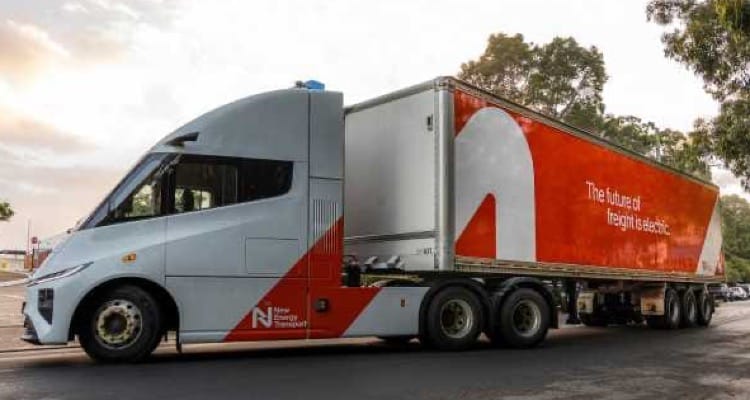
A proposed electric truck depot near Sydney has been fast-tracked under a federal program targeting projects of national importance.
The federal government has selected New Energy Transport's planned zero-emission heavy freight depot at Wilton, south-west of Sydney, for its new Investor Front Door program, designed to streamline regulatory approvals for priority projects. The initiative comes as Australia confronts fuel supply pressures and supply chain vulnerabilities. The depot, intended to support up to 50 heavy electric trucks, is expected to be operational by late 2026.

▷Scaling seaweed and microalgae
The Department of Industry, Science and Resources has awarded $6.9 million in grants to five pioneering projects through the Industry Growth Program to help businesses commercialise their products, processes and services. Bioborne received $2.2 million to scale AI-driven microalgae fertiliser production, while Uluu secured $2.1 million to produce its seaweed-based plastic alternative. Aston Dynamics was awarded $1.5 million for its hydraulic jet brake technology for electric trailer brakes, and Immersion Group received $750,000 for its methane-reducing seaweed photobioreactor. Finally, Levur secured $250,000 to advance precision fermentation for sustainable palm oil derivatives.
▷Hydrogen fuel cells redesigned
Researchers from the University of NSW (UNSW) said they have redesigned hydrogen fuel cells to overcome a critical technical flaw, potentially accelerating the transition to clean energy for aviation and heavy transport. Hydrogen fuel cells use locally produced green hydrogen, but their commercialisation has long been hindered by internal water management issues. In traditional designs, a portion of the water produced during the chemical process becomes trapped, which blocks the flow of oxygen and chokes performance. The UNSW team said their approach introduced a new architecture that allowed excess water and gas to escape before a buildup could occur. According to the university, this leads to a far more efficient system that makes hydrogen fuel cells a more viable and attractive option for mass-market adoption.
▷Fire management update approved
Savanna fire management in Australia has entered its next phase, with the approval of updated settings under the Australian Carbon Credit Unit scheme. Corporate Carbon Group said the update followed a review by the Department of Climate Change, Energy, the Environment and Water and aligned with the latest scientific understanding of fire in savanna landscapes. The projects use early dry-season burning to reduce late-season wildfire emissions across more than 34 million hectares of northern Australia, with a large proportion of the abatement delivered through Indigenous-led projects.
▪️The Zero Planet is an independent Australian news site focusing on climate-friendly innovation. Follow us on LinkedIn and Instagram.