The weekly roundup: 🏄♂️Surfing the future
In this week's news we look at a sporting innovation tackling wind-turbine waste and we meet the pet treat of the future.


While surfboard fins and pet treats don't have too much in common, this week's stories demonstrate that the path to solving big problems sometimes runs through surprisingly modest entry points.
The renewable energy industry has an ageing wind turbine blade problem and on the Gold Coast, recycled blades are proving their worth in the surf as just one way to deal with this growing waste issue.
The meat industry has both an emissions problem and an ethical dilemma. In Melbourne, a cultivated meat startup is addressing both using dog treats to stress-test its way toward a human food revolution.
From wind to wave
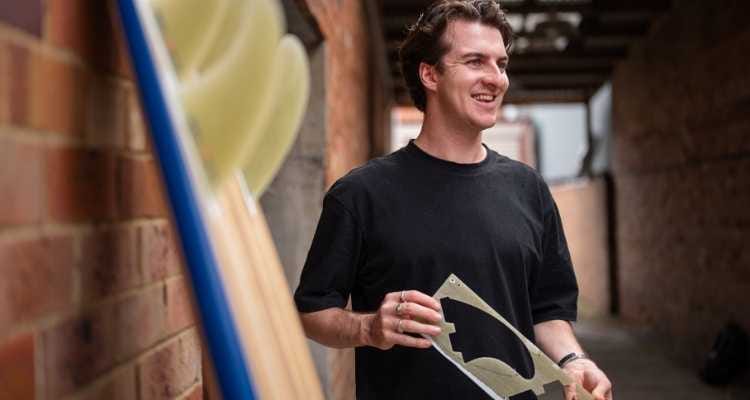
A Gold Coast surfing competition has become the testing ground for a practical solution to a looming waste problem.
Australian surf brand Bolero Surf has manufactured the world's first retail-ready surfboard fins from recycled wind turbine blades, and held them up to the performance demands of modern competitive surfing. The result points to a practical new pathway for reusing decommissioned turbine blades.
Cultivating pet treats

A Melbourne food tech startup has launched Australia's first commercially-available cultivated meat pet treat.
Magic Valley is primarily developing cultivated pork for human consumption, but says the pet product line serves as both an early revenue stream and a practical test of its production and logistics capabilities with its initial run selling out within a week of pre-orders opening.

▹Australia's largest EV-Enabled Building
Melbourne's Sierra Hawthorn has become Australia's largest EV-enabled building, with 251 EV charging points installed across all 241 apartments and five commercial tenancies, with each resident given a dedicated charging point in their parking space. The project, launched by Federal Energy Minister Chris Bowen and clean-tech company NOX Energy, is funded partly through ARENA's Driving the Nation initiative, and aims to remove charging barriers for apartment dwellers.
▹Salvos expands into textile recovery
Salvos Stores has opened a new textile recovery facility in Brisbane to address industrial-scale clothing waste. Described as the first site of its kind in Australia, it uses automated sorting and decommissioning technology and is designed to pilot and scale recovery methods for textiles that would otherwise be discarded. The Queensland Government has invested almost $5 million in the project, which aims to process up to 5,000 tonnes of material annually, focusing on diverting clothing from landfill.
▹Over counter rat poisons to be banned
Australia's pesticide regulator (APVMA) has recommended restricting over-the-counter rat baits containing second-generation anticoagulant rodenticides (SGARs), effectively removing them from retail shelves, ABC news reports. The move follows concerns from wildlife advocates that SGARs fatally poison native birds and reptiles, particularly owls, that eat poisoned rodents.
▹Funding boost for thermal energy
MGA Thermal has secured $17 million in funding to accelerate the decarbonisation of heavy industry through its industrial-scale renewable heat storage solution. This funding round introduces UK-based IP Group Australia as a new partner and includes continued support from existing investor Main Sequence, bringing the company’s total capital raised to more than $50 million. MGA Thermal said it intends to use the funds to expand its workforce, fast-track pending customer projects, and significantly scale its manufacturing capacity.
▹Quantum battery breakthrough
A collaboration between CSIRO, RMIT, and the University of Melbourne has produced the first proof-of-concept quantum battery, a breakthrough that could eventually allow electric vehicles to charge faster than conventional petrol cars refuel, according to researchers. The study, published in Light: Science & Applications, validates a counterintuitive quantum effect: these batteries actually charge faster as they increase in size, unlike current chemical-based storage.