The NZ startup at fusion’s frontier
Global race heats up for the ‘holy grail’ of clean energy as fusion startups break boundaries and prepare for industrial scaling.

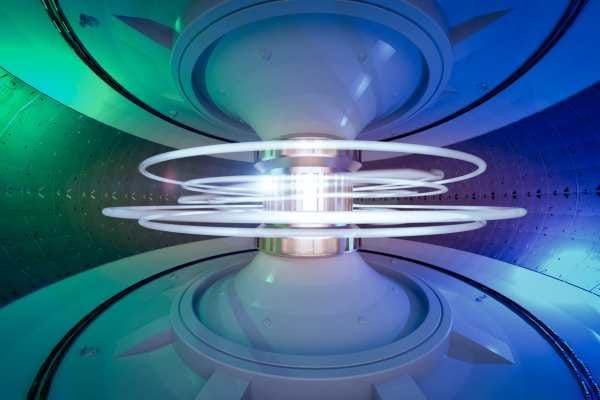
The global pursuit of fusion energy – which replicates the sun's power to create a near-limitless source of electricity – has entered a high-stakes era.
Long considered the holy grail of energy production, fusion involves fusing light atoms into larger ones, releasing vast amounts of energy while avoiding the centuries-long radioactive waste produced by traditional nuclear fission.
Among the lineup of innovators in the field is New Zealand startup OpenStar Technologies which last week demonstrated a fully commissioned fusion prototype called 'Junior’ at an event attended by New Zealand Prime Minister Christopher Luxon.
OpenStar says it has taken an alternative approach to traditional fusion architecture, deploying levitated dipoles which it hopes will deliver a faster and less costly approach to fusion.
"This support accelerates our pathway from prototype to commercial-scale plants. For New Zealand, it positions the country as a contributor to the global energy transition, not just a beneficiary."
In the live demonstration, OpenStar's prototype was able to levitate a large half-tonne magnet while simultaneously confining superheated gas, which it says represents a key milestone in its journey from prototype to a commercial-scale plant.
The New Zealand Government announced earlier in February that it would invest up to NZ$35 million through the Regional Infrastructure Fund, delivered as a loan to OpenStar to help establish a specialised facility to house its next fusion machine.
“For OpenStar, this support accelerates our pathway from prototype to commercial-scale plants. For New Zealand, it positions the country as a contributor to the global energy transition, not just a beneficiary," the company says.
"For the fusion sector globally, it demonstrates that breakthrough innovation can emerge from focused engineering teams with the right backing, regardless of geography.”
Global aspirations
Once its immense technical challenges are overcome, fusion could deliver clean, abundant, and reliable energy from almost any location.
This potential has sparked a surge in global investment as governments and private backers scramble to meet climate goals and ensure energy security – both of which are being strained by the massive power demands of the data centres that enable AI.
Massachusetts-based Commonwealth Fusion Systems (CFS), a market leader in the sector, says it aims to deliver grid-ready fusion power using advanced magnets by the early 2030s.
“Commercialising fusion is immensely challenging, and success is not guaranteed. But if it works, it could change the world by providing a more secure and clean energy future,” the company says.
In a major milestone, CFS says it recently delivered the first 24-ton steel-clad magnet to become part of SPARC, the machine it is building to demonstrate the core technology of a fusion power plant. To accelerate development, the company is collaborating with tech innovators NVIDIA and Siemens to create a 'digital twin' of the SPARC machine.
"Commercialising fusion is immensely challenging, and success is not guaranteed. But if it works, it could change the world by providing a more secure and clean energy future."
It says this virtual model is designed to help CFS achieve its goal of producing more power than the fusion process consumes – a feat never before accomplished by a private startup.
Success at SPARC is intended to pave the way for ARC, the company’s first commercial power plant located in Virginia. The project has already captured the attention of Big Tech with Google recently signing a landmark agreement to source 200 megawatts of clean energy from the inaugural ARC plant.
Laser focus on fusion
California-based Inertia Enterprise announced this month that it had secured US$450 million in Series A funding to commercialise the physics of laser-driven fusion.
Its technology builds on the historic 2022 breakthrough at the National Ignition Facility (NIF), which was able to produce more energy than the laser energy used to drive it.
Inertia says the round, led by Bessemer Venture Partners, will fund the development of 'Thunderwall', a next-generation laser system, and an industrial-scale manufacturing line for fusion fuel targets.
Unlike the experimental setup at the NIF, Inertia says its technology aims for high-repetition fusion, with a goal of delivering a utility-scale power plant to the grid within the next decade.
Dr Annie Kritcher, the lead designer of the NIF’s ignition-achieving 'Hybrid-E' experiments and now Chief Scientist at Inertia, said that the company is focused on "translating physics we know works into a pathway toward commercial-scale fusion energy, and the real benefits it can deliver for people and the planet."
Compact fusion
Seattle-based fusion pioneer Avalanche Energy announced this month that it had secured US$29 million in new funding led by RA Capital Management to help it expand its dedicated FusionWERX test facility in Richland, Washington.
Unlike traditional, building-sized fusion projects, Avalanche focuses on compact devices designed for rapid iteration to provide clean energy for applications in austere and grid-challenged settings such as space propulsion, underwater UAVs, data centres and military bases.
"We've achieved significant breakthroughs on the plasma physics side that have kept us intensely focused on advancing our technology over the past six months."
The company says that its rapid iteration approach, testing designs on a scale of days rather than years, "represents a fundamental shift in fusion development methodology".
"We've achieved significant breakthroughs on the plasma physics side that have kept us intensely focused on advancing our technology over the past six months," Avalanche Energy CEO Robin Langtry said.
Dialling up the heat
Washington-based Helion Energy announced this month that its Polaris prototype has become the first privately-funded machine to operate using deuterium-tritium fuel and surpass plasma temperatures considered necessary for commercial relevance. achieving 150 million °C.
Helion began operating its 7th-generation Polaris prototype at the end of 2024 and says it is currently building its first commercial machine, Orion, in Malaga, Washington, which is intended to provide electricity to the grid for Microsoft.
Helion says it will continue testing to reach optimal temperatures for deuterium-helium-3 fusion, a fuel it intends to use for commercial operations.
China’s 'Artificial Sun'
Researchers at China’s Experimental Advanced Superconducting Tokamak have reportedly surpassed a long-standing density barrier in fusion plasma.
The Chinese Academy of Sciences announced in January that experimental 'artificial sun' technology reached a density-free regime, where the plasma remained stable even when its density exceeded traditional physical limits.
Previously, scientists believed these density levels would cause plasma instability, stalling progress toward ignition. However, the researchers say their experiment confirmed that stability can be maintained if interactions with the reactor walls are strictly controlled.
It said this breakthrough is expected to allow future reactors to produce significantly more power, bringing the goal of fusion ignition closer by removing one of the "most stubborn physical barriers" in the field.
Eyes on Europe
The Fusion Industry Association (FIA) in January called on the European Union to implement urgent policy changes to avoid falling behind international competitors.
During a European Parliament hearing, the FIA urged for a regulatory framework that distinguishes fusion from nuclear fission and requested milestone-based public funding.
The EU hosts seven fusion start-ups located in Germany, France and Sweden, which have collectively raised nearly €1 billion, however this represents less than 10% of global private investment according to the FIA.
The FIA stressed the need for public-private partnerships to "de-risk deployment" and keep strategic clean-tech jobs within the continent. FIA EU Director Olga Bakardzhieva said: "Competitors are moving faster with coordinated models; without rapid action, Europe will lose ground.”
Often called 'star power', nuclear fusion mimics the process that fuels the sun. Unlike traditional fission, which splits heavy atoms like uranium, fusion merges light atoms into larger ones to release colossal amounts of energy. This process is inherently safe: it carries no risk of meltdown and produces no long-lived, high-level radioactive waste. However, replicating a star on Earth is a monumental challenge. To force atoms to fuse, fuel must be heated to over 100 million°C – far hotter than the sun’s core. At this temperature, matter becomes a volatile plasma that must be suspended by powerful magnets or high-energy lasers to prevent it from melting its container. While recent experiments have achieved 'ignition' – producing more energy than the lasers delivered to the fuel – the next hurdle is sustaining this reaction to provide a limitless supply of clean, carbon-free electricity.