Where solar meets design
These commercial projects are blending renewable energy generation with architectural design.

For years, rooftop solar was treated as a purely functional add-on, engineered for output not aesthetics.
Today, that mindset is shifting. A new wave of architecturally integrated solar is transforming commercial rooftops into design assets that generate clean energy while reinforcing a building’s visual identity.
From customised layouts to colour-matched modules and integrated structural systems, renewable energy infrastructure is being designed to enhance, rather than compromise, architectural intent. Three projects show how this approach is taking shape.
Branding the rooftop
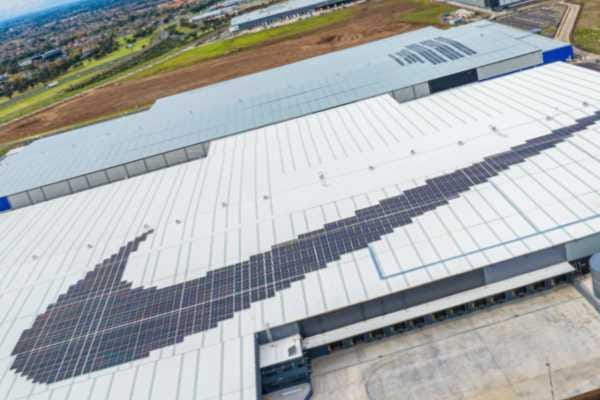
At Nike’s Ravenhall distribution centre in Victoria, rooftop solar infrastructure doubles as a brand statement. Around 5,200 square metres of roof space have been configured into the shape of the globally recognised Nike Swoosh.
As well as transforming the building into a renewable energy asset with visual impact, the installation delivers measurable emissions reductions according to Nike, contributing to the company’s "Move to Zero" emissions reduction program.
PV modules for the 1MW commercial installation were delivered by Trinasolar in partnership with Energy Aware. The system comprises 2,000 500W modules and is expected to generate approximately 1.24 million kWh of renewable energy annually and is expected to reduce carbon emissions by an estimated 1,327 tonnes per year, according to the footwear giant.
"This installation demonstrates how large commercial rooftop solar projects can deliver renewable energy outcomes while also meeting site-specific visual design requirements."
The project also reflects growing interest in functional, architecturally integrated solar designs, according to Trinasolar Asia Pacific group director of Australia, New Zealand and Pakistan, Edison Zhou.
“This installation demonstrates how large commercial rooftop solar projects can deliver renewable energy outcomes while also meeting site-specific visual design requirements,” Zhou said.
“The Swoosh configuration highlights how solar installations can become a visible architectural feature for large-scale C&I projects such as logistics facilities without changing the fundamentals of commercial system delivery.”
Energy Aware director Nick Burrows said achieving the Swoosh configuration required careful coordination between design intent and engineering constraints.
“For a project of this scale and precision, we needed panels that offered consistent performance, reliability and strong support," Burrows said.
“We chose Trinasolar modules because their efficiency, proven durability and technical backing gave us the confidence to execute the Swoosh design without compromising system output.”
A working canopy
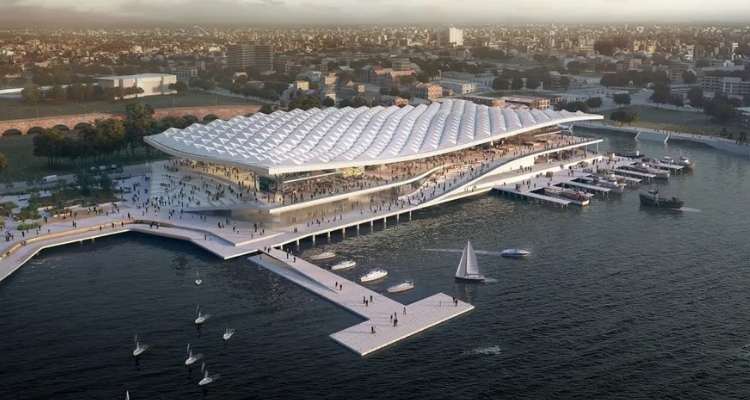
At Blackwattle Bay, the new Sydney Fish Market has turned its roof into more than a protective lid. The 20,000-square-metre canopy undulates across the site with its triangular pattern suggestive of overlapping scales or ripples across the harbour.
Within that modular system, solar generation, daylighting, ventilation, and rainwater harvesting and are all embedded, as opposed to added extras.
The 200-metre-long structure, designed by 3XN GXN in association with BVN and Aspect Studios, was completed in November last year and includes 594 sustainable timber beams and 407 pyramid-shaped aluminium roof cassettes.
Solar, threaded through the design rather than sitting on top, encompasses a 265 kW photovoltaic system that spans 263 triangular pods, supplying at least 5% of the market’s overall energy demand, according to Sydney-based installer Inspire Energy.
“This installation demonstrates how large commercial rooftop solar projects can deliver renewable energy outcomes while also meeting site-specific visual design requirements.”
Colour-matched PV modules and framing blend with the aluminium cladding, allowing the roof’s geometry to remain the dominant visual element.
The canopy also reduces the building’s operational load. South-facing cassettes bring in soft, indirect daylight, trimming artificial lighting needs by about 15%, according to GXN, while permeable sections allow harbour breezes to move through the market hall. Together with passive shading, GXN says these measures contribute to a projected reduction in energy use of up to 35%.
Behind the scenes, absorption chillers reuse excess refrigeration heat, and leftover ice is repurposed to help pre-cool air. Rainwater is captured at two low points in the roof for filtration and reuse. Combined with greywater recycling and efficient fixtures, the system is expected to cut potable water use by 50% compared with the previous market, according to its creators.
GXN partner and head of consultancy Lasse Lind said the aim was to make the roof perform on multiple levels simultaneously. “The modular roof harvests every raindrop and holds solar cells, it provides natural daylight and passive ventilation, and it enables complete reconfiguration of spaces below as the market needs evolve,” he said.
“This installation demonstrates how large commercial rooftop solar projects can deliver renewable energy outcomes while also meeting site-specific visual design requirements.”
Solar in the skyline
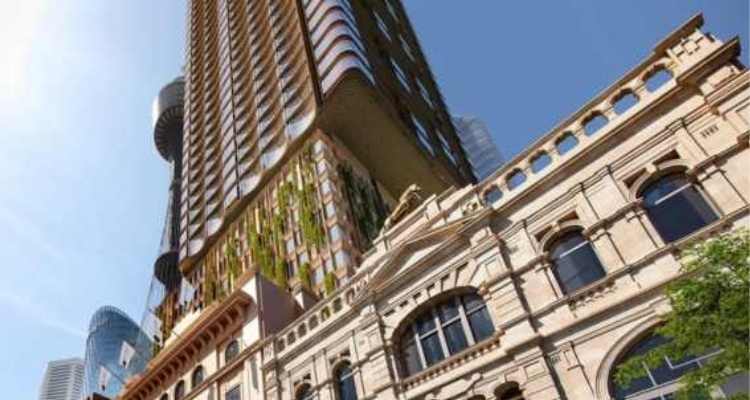
The $308 million redevelopment of Sydney’s iconic City Tattersalls Club also demonstrates how solar can be woven directly into a high-rise form.
The construction project is reimagining the heritage institution, originally established in 1895, as a mixed-use building comprising a six-storey podium and a 50-storey hotel and residential tower.
Rather than limiting renewable energy to conventional rooftop panels, the design integrates solar glazing into the roof section itself, developers say. Between levels 44 and 50, a glazed rooftop terrace will incorporate pure black solar feature glass, generating on-site clean energy while maintaining the aesthetic required of a landmark CBD tower.
ClearVue Technologies was engaged to supply the specialised solar glazing, marking the company’s first commercial city tower installation. Its photovoltaic glass systems are designed to extend solar capability beyond rooftops and into façades through windows, skylights, cladding and balustrades.
The integration is expected to strengthen the building’s sustainability profile and support its ambition to achieve a 6 Star NABERS energy rating. SRG Global project manager Sayeed Ansari said the visual cohesion of the solar elements was central to their inclusion.
“The SRG team along with the project’s architects were particularly impressed by the visual appeal of ClearVue’s products, which seamlessly matched the non-photovoltaic materials used on the building which are providing the project architects with the creative freedom essential for a sophisticated design execution,” Ansari said.
Related news
 Amanda Bryan
 Amanda Bryan
 Louisa Hearn
 Amanda Bryan