Oceanic oPod takes top honours
Blue Carbon, creator of the ocean-restoring oPod system, is earning recognition as Australia’s budding blue-tech sector gathers pace.

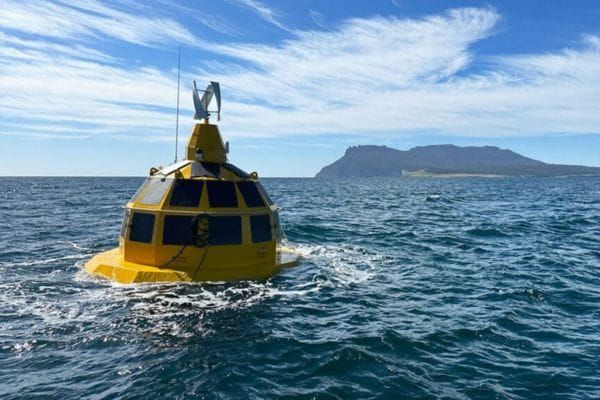
Blue Carbon’s sea-powered oPod technology is making waves in the burgeoning blue-tech sector.
The Brisbane-based startup was recently named winner of this year’s KPMG Nature Positive Challenge, becoming the first finalist to secure both the $100,000 main prize and the $20,000 People’s Choice Prize.
The accolade comes as the global ocean economy enters a period of rapid expansion.
A January report issued by the World Economic Forum and McKinsey & Company, projects the ocean economy will nearly double from US$2.6 trillion in 2020 to $5.1 trillion by 2050.
It says ocean-based industries already generate an estimated $3.3 trillion in annual value, driven by investment in decarbonisation, desalination and digital infrastructure, alongside a surge of early-stage blue tech innovation, much of it still in pilot or demonstration mode.
“Full commercial scale will require alignment across capital, data, and policy,” the authors wrote. “The landscape is beginning to change in real time. Those conditions are finally starting to converge, creating a shift that feels both overdue and consequential.”
Blue Carbon’s technology sits squarely within that space. Its oPod system harnesses wave and solar energy to monitor, cool and oxygenate ocean water using self-powered buoys.
“Blue Carbon stood out for its novel technology and integration of artificial intelligence to accelerate the monitoring and regeneration of natural systems, moving us closer to a resilient, nature-positive economy"
The system is being piloted with aquaculture operators to reduce heat stress, stabilise water conditions and lower operational risk, Blue Carbon says. The company says it is also trialling 'direct ocean desalination' to produce drinking water directly from seawater.
Climate at the core
Blue Carbon was founded in 2022, and says it developed its oPod tech to transform natural ocean energy into practical climate infrastructure.
In coral reef environments, oPods can circulate cooler deep water during marine heatwaves, helping reduce thermal stress and prevent bleaching, Blue Carbon says.
In aquaculture, they are designed to stabilise temperature and oxygen levels, flush particulates and reduce reliance on diesel-powered aeration and pumping, lowering operating costs while improving stock welfare.
For desalination plants, the company says oPods assist with cooler intake water and three-dimensional brine dilution, easing membrane strain, improving efficiency and supporting environmental compliance, without adding energy demand.
Underpinning the system is an in-house AI platform which Blue Carbon says converts sensor data into site-specific forecasts and decision-support tools, enabling users to anticipate events such as stratification, low oxygen and bloom risk.
“Winning the KPMG Nature Positive Prize is a catalyst for Blue Carbon,” the startup’s CEO Dr Ana Novak said. “It will help us scale passive, ocean-powered systems that support healthier marine ecosystems while reducing energy demand across ocean industries."
Winning formula
Blue Carbon was one of five finalists selected for the KPMG Challenge, which aims to highlight technologies created to help restore ecosystems.
Skincare company Native Secrets Australia received the First Nations Award, recognising the contribution of Indigenous knowledge to natural ecosystems. The other three finalists were textile recycler BlockTexx, bio-based dyes and binders maker Newera Bio ultra-fine chip interconnect maker Syenta (see box). The finalists share a $250,000 pool of tailored advisory services to help scale their businesses.
KPMG said its annual Nature Positive Challenge aims to promote innovative technology and circular solutions that deliver measurable environmental outcomes. The 2025 program, according to the professional services firm, focused on two fast-growing sectors within the nature-positive ecosystem: AI-enabled solutions and startups supporting the circular economy.
KPMG Australia CEO Andrew Yates said: “This is the first time that one company has won both of the monetary prizes in the KPMG Nature Positive Challenge. Our judging panel, and our people, were clearly impressed with how Blue Carbon is tackling some of the biggest issues facing ocean ecosystems.
“Blue Carbon stood out for its novel technology and integration of artificial intelligence to accelerate the monitoring and regeneration of natural systems, moving us closer to a resilient, nature-positive economy.”
The company has received other recognition, with Blue Carbon also a Qualified Team in the US$119 million XPRIZE Water Scarcity competition for its direct ocean desalination work, a double Earthshot Prize nominee, and winner of the Accenture Australia Product Innovation Award at the 2025 Brisbane Lord Mayor’s Business Awards.
Blue Carbon’s partners include CSIRO, Griffith University, AMPTO, James Cook University, the Australian Institute of Marine Science and the Hong Kong Carbon Trading Centre.
Past winners of the KPMG Nature Positive Challenge include plastic-alternative biotech Uluu, synthetic palm oil alternative Levur, and biodiversity data analytics company Xylo Systems.
◻️ Native Secrets Australia from Dubbo, NSW makes skincare and wellness products using native botanicals derived from cultural harvesting cycles that protect land and support ecosystem regeneration, and was selected as the winner in the First Nations category.
◻️ BlockTexx from Loganholme, Queensland, recycles textiles and clothing, transforming waste into high-value raw materials.
◻️ Newera Bio from Sydney, NSW is pioneering the development of high-performance, bio-based dyes and binders to replace toxic and fossil-fuel-based dyes used in the textiles and beauty industry.
◻️ Syenta from Eveleigh, NSW makes ultra-fine wiring inside computer chips called interconnects, which are much smaller and denser, allowing data to move more efficiently for next generation computing.