New climate champion takes root
Something important is happening quietly beneath our feet as underground networks store vast quantities of carbon.

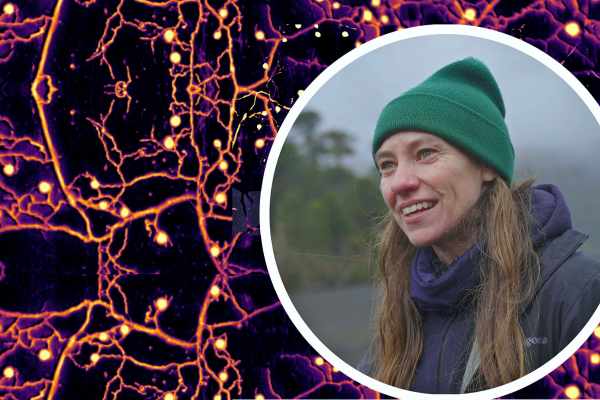
Underground networks of mycorrhizal fungi have been revealed as powerful yet largely overlooked allies in the fight against climate change.
Professor Dr Toby Kiers of Vrije Universiteit Amsterdam has been named as the winner of the 2026 Tyler Prize for Environmental Achievement for shedding light on these hidden fungal networks, which are capable of storing vast amounts of carbon, boosting biodiversity and fostering climate resilience.
Mycorrhizal fungi grow in symbiosis with surrounding plants, and it has long been underestimated just how large and interconnected these systems are, as revealed in Kiers’ findings.
The Prize, which will be presented in Amsterdam in April, was awarded to Kiers for her leading role in bringing worldwide attention to the fundamental role mycorrhizal fungal networks play in keeping ecosystems running smoothly, regulating the climate and supporting life below ground.
Her work combines science and technology with conservation, and includes mapping and monitoring these networks to reveal the sprawling underground systems of mycorrhizal fungi that connect plant roots.
Through these connections, plants and fungi trade nutrients and carbon, with the fungi also helping to channel carbon into the soil. Kiers estimates that plants send more than 13 billion tonnes of carbon dioxide equivalents to these fungi every year, which is roughly one-third of global fossil fuel CO₂ emissions.
This symbiotic relationship is now seen as crucial to maintaining biodiversity and helping ecosystems cope with stress, because mycorrhizal networks support nutrient cycling, improve soil structure and help soils retain water. Maintaining soil health continues to grow in importance in a changing climate, scientists say.
“With 90% of our most diverse underground fungal systems unprotected, urgent action is needed to incorporate fungal data into global conservation plans.”
The Tyler Prize, often described as the “Nobel Prize for the Environment”, honours individuals whose work has made major contributions to environmental science and policy. The prize committee said Kiers’ research had important implications for climate mitigation and conservation efforts around the world.
Kiers is being honoured for her “transformative research on the importance of mycorrhizal fungi in underground carbon flows, biodiversity, and climate resilience,” according to the official citation.
Kiers has also co-founded the Society for the Protection of Underground Networks (SPUN), a global not-for-profit initiative to map mycorrhizal fungal biodiversity and advocate for its protection.
SPUN recently released a high-resolution digital ‘Underground Atlas’ predicting the diversity of underground mycorrhizal fungi, enabling decision-makers to pinpoint where to protect highly diverse and threatened fungi (see tech box).
Underground advocates
Last month, SPUN also launched a new program named Underground Advocates, jointly developed with New York University, to equip scientists and conservation groups with legal and policy tools to document and protect mycorrhizal fungi in biodiversity hotspots around the world.
The program will also amplify local efforts and enable peer collaboration across continents, according to Kiers, and is expected to include at least five new conservation projects led by "underground advocates" worldwide.
“With 90% of our most diverse underground fungal systems unprotected, urgent action is needed to incorporate fungal data into global conservation plans,” she said.
Chair of the Tyler Prize Executive Committee Rashid Sumaila said, “Toby’s work to translate scientific insight into real-world action, most recently with SPUN’s new Underground Advocates program, demonstrates her leadership in advancing global efforts to protect the fungal networks that sustain life on Earth.”
SPUN’s Underground Atlas is a digital tool that predicts mycorrhizal biodiversity and endemism across Earth’s underground ecosystems. The atlas draws on more than 2.8 billion fungal sequences from 130 countries, and allows users to explore predicted hotspots of rare and diverse fungi and overlay them with protected areas to see what remains unprotected. The atlas aims to help decision-makers identify unique underground communities and potential conservation corridors in a first step toward integrating mycorrhizal systems into global biodiversity, climate and restoration targets.
Related stories
 Amanda Bryan
 Amanda Bryan
 Amanda Bryan