The weekly roundup: ⚡️Power moves go local
In this week's news, a rural community switches on its new solar farm while cotton fibres go under the microscope.



From fingerprints to fuel prices, this week's stories share a common thread: the high cost of uncertainty.
For decades, industries from fashion to energy have operated on trust, that supply chains are ethical, that resources are abundant and that the status quo is stable. Two stories this week illustrate what happens when that trust erodes. In one, fashion retailers are turning to forensic chemistry to verify what their own paperwork cannot. In the other, communities, freight operators and policymakers are scrambling to reduce dependence on a fuel supply they cannot control. The lesson in both cases is the same: Transparency and diversification are becoming baseline expectations, while the cost of ignoring them comes with a hefty price tag.
People power
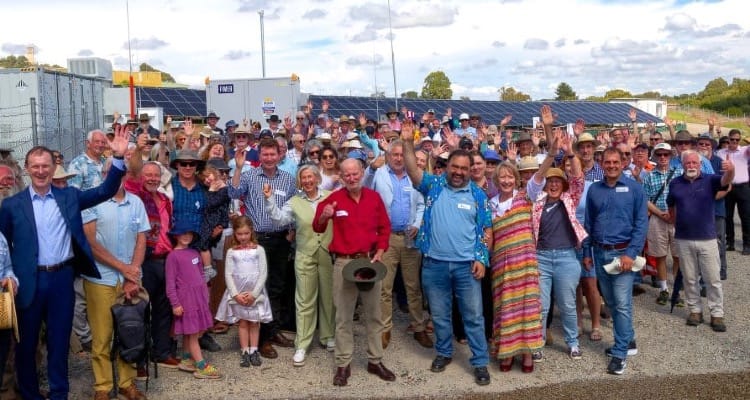
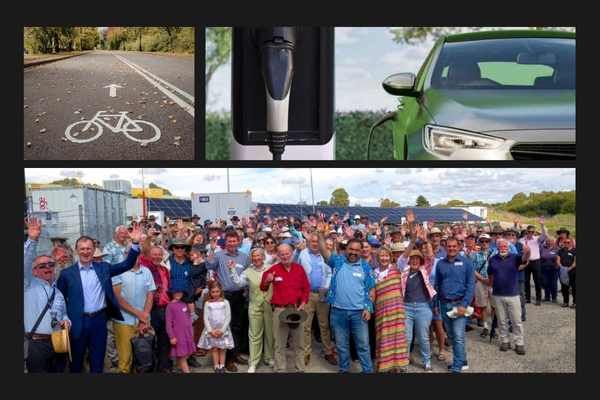
A 12-year community effort in regional NSW has produced one of Australia's first community-led solar farms – and it comes at precisely the right moment.
As rising fuel prices reshape household and industry economics, a broader pivot toward renewable energy appears to be gaining momentum. Electric vehicle sales have reached record levels, a coalition of freight businesses is pressing the government for policy reform, and climate action groups have joined the call for a tax on gas exports to assist communities facing rising climate-related insurance and energy costs.
Forensic fibre
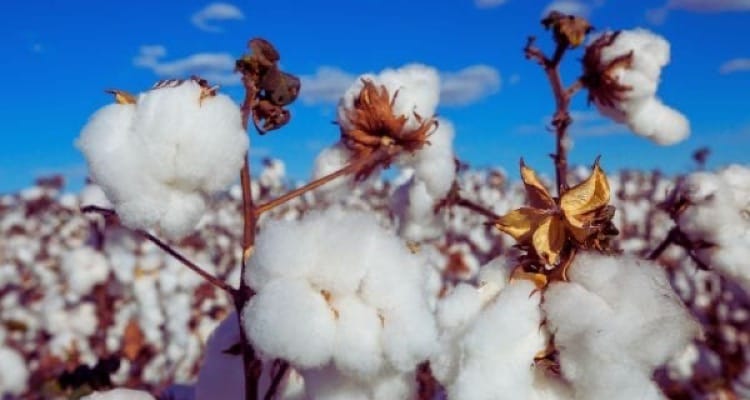
Fashion's paper trails have a credibility problem. This New Zealand company thinks chemistry can provide the solution.
As greenwashing scandals and forced labour allegations reshape expectations for supply chain accountability, a growing number of fashion retailers are turning to forensic science to verify the origins of natural fibres. The method, which analyses isotopes and trace elements left by local soil, weather and elevation, produces a chemical fingerprint that can be matched against a global database.

▷ Funding for green steam
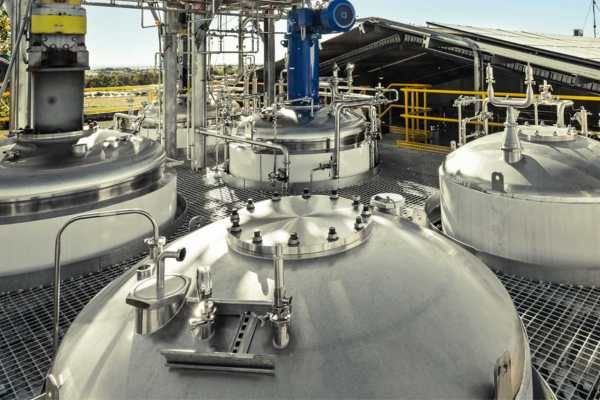
Australian clean technology firm Graphite Energy has secured $40 million in funding to accelerate the deployment of its thermal energy storage systems, RenewEconomy reports. The capital, comprising a $15 million loan and $25 million in equity, will support the company to scale its "Green Steam" technology developed to generate carbon-free industrial heat, integrating with existing boilers to replace fossil fuels. The technology is currently operating at a Wodonga petfood facility, and is also being installed for two multinational companies, with eight additional projects entering detailed engineering phases.
▷ Record sales for EVs
Australian electric vehicle (EV) sales reached a record 14.6 per cent market share in March 2026 according to data released this week by the Federal Chamber of Automotive Industries (FCAI). With 15,839 electric vehicles sold, the segment doubled its year-on-year share to 14.6 per cent of total sales despite a 3.3 per cent decline in total vehicle sales. FCAI Chief executive Tony Weber attributed the surge to Middle East fuel supply disruptions and tax concession reviews. “Ensuring infrastructure keeps pace with consumer demand will be critical to enabling sustainable growth in EV adoption beyond short-term influences,” he said.
▷ LA wave pilot wraps up
Swedish developer Eco Wave Power has successfully wrapped up its onshore wave energy pilot at blue economy hub AltaSea at the Port of Los Angeles. Energy at the demonstration site, which was the first of its type in the US, was generated by a series of floaters attached to an existing breakwater. Eco Wave Power, which collaborated with Shell on the project, said the pilot’s completion established a foundation for future commercial-scale wave energy deployments on coastal infrastructure. Moving forward, the AltaSea installation will serve as a permanent educational and demonstration hub.
▷ Future food duo join forces
Australian advocacy groups Food Frontier and Cellular Agriculture Australia (CAA) have announced plans to merge to form a single entity focused on the sustainable protein sector. The unified organisation will coordinate research and regulatory advocacy across plant-based, cultivated, and fermented protein technologies. The merger formalises years of informal collaboration, the organisations said, with Food Frontier to fully integrate its programs into CAA’s expanded remit. The move aims to streamline domestic supply chains and biomanufacturing policy, according to the groups, with a strategic review and rebranding scheduled later this year.