The weekly roundup: 🏭 Industrial upstarts
This week's news offers a glimpse of how biomanufacturing is taking shape, from the industrial to the commercial.


Australia's biomanufacturing sector is quietly assembling the building blocks for a cleaner and more efficient alternative to the traditional factory floor.
This week's news offers a glimpse of how that is taking shape, from the industrial to the commercial.
Cauldron Ferm's $19 million raise takes aim at solving one of the sector's most stubborn problems: making biological production reliable and cost-competitive at genuine industrial scale. Among its collaborators is WA seaweed startup Uluu, which recently demonstrated how that upstream capability can translate into finished consumer products – in this case, sunglass frames made from farmed seaweed biomaterial.
Factory of the future
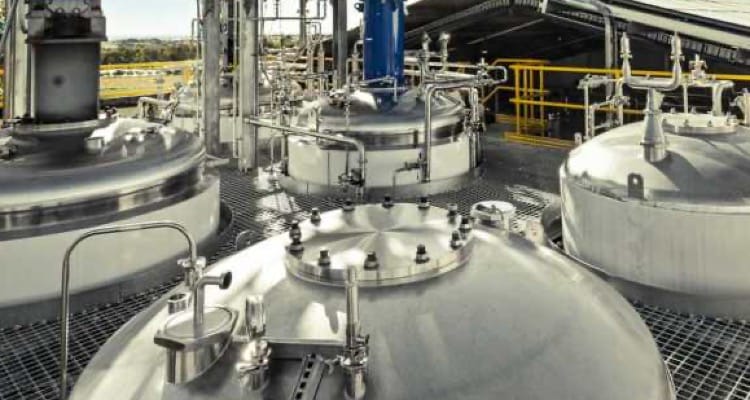
An Orange-based startup is using microbes to make biological production viable at an industrial scale.
Cauldron Ferm has raised $19 million to expand its continuous "hyper-fermentation" platform from pilot to full-scale production, with applications spanning food ingredients, cosmetics, chemicals and fuels. The company says it's the first to demonstrate the approach at the 10,000-litre scale.
Sunnies from seaweed
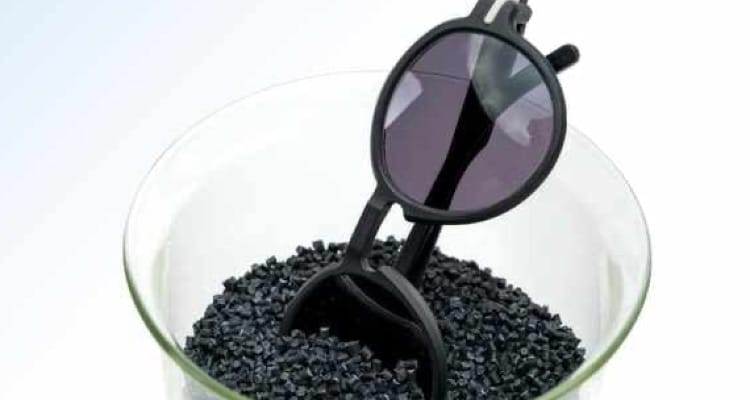
A Sydney-based sunglasses manufacturer has begun prototyping a new product line using farmed seaweed.
Good Citizens, which makes frames from recycled plastic bottles, recently partnered with Western Australian startup Uluu to create the prototypes made from seaweed-based biomaterial supplied in pellet form. The collaboration marks Uluu's first foray into eyewear, following earlier product trials with surf brand Quiksilver and sleepwear label Papinelle.

▹Rooftop relief
Thanks to an oversupply of solar energy now flowing into the grid in the sunniest hours of the day, households with or without solar panels in NSW, Queensland, South Australia and Victoria will soon gain access to three hours of free solar power in the middle of the day. The Solar Sharer Offer announced by the federal government late last year will kick off on 1 July for Australians in NSW, South East Queensland, and South Australia, with other states expected to follow. Victoria, meanwhile, is offering households three hours of free power in the middle of the day from 1 October, with more details on its Midday Power Saver scheme to be released by the state government next month.
▹A win for wildlife
The City of Moreton Bay in Queensland has won a national award for its extensive efforts to protect local wildlife from traffic hazards. The council’s Green Infrastructure Network Delivery Program has turned more than 3,800km of the region's road network into a safer environment through the installation of 47 canopy bridges, 48 wildlife underpasses, and 21km of exclusion fencing. The program also features vehicle-activated LED signage and fauna escape hatches to reduce roadkill. The City of Morton Bay received the Project Award from the Australasian Network for Ecology and Transportation.
▹Fighting weeds with insects
Also in the City of Moreton Bay, a new biological control facility will breed tens of thousands of insects annually to combat two invasive weed species across South East Queensland. The Samford Biological Control Facility, led by the Pine Rivers Catchment Association, will mass-rear jewel beetles, tingid bugs and madeira beetles, which are natural predators of cat's claw creeper and madeira vine. Local volunteers from the Samford Men’s Shed supported the project by building custom ‘bug dorms’ filled with cat’s claw creeper and madeira vine to provide food for the beetles and bugs. The council said the insects will be released across priority catchments regionwide.
▹Funds for NZ cattle trial
Western Australian agtech Rumin8, which is developing 'nature-inspired' methane-busting feed additives for cattle, has raised A$4.3 million from a New Zealand investor. Public-private partnership AgriZeroNZ committed the funds which will go towards a large commercial-sized trial that aims to provide safety and efficacy results and define the instructions and dosage on the final product label ahead of the product's registration. Rumin8’s previous investors include Bill Gates-founded Breakthrough Energy Ventures (BEV) and Harvest Road Group which is owned by Andrew and Nicola Forrest. Rumin8 hopes to have its first commercial sales in New Zealand next year.
▹Innovators eye Europe
Australia and the European Union have commenced formal treaty negotiations for Australia to become an associate member of Horizon Europe, the EU's international research and innovation funding programme. Horizon Europe is the closest form of international cooperation in science and technology between the EU and a non-EU country and associate status will allow Australian organisations to lead and participate in projects on key research priorities, including supply chain security, critical minerals and climate and clean energy. Horizon Europe's current cycle holds a funding pool of approximately $155 billion and Australian organisations could begin applying for funding from early 2027, pending completion of the treaty process.
▹Wave trial for WA
Perth-based wave energy startup WaveX has secured a seabed license from Southern Ports, authorising the deployment of a large-scale pilot generator in Albany’s King George Sound. The license enables the company to transition from the planning phase into open-water execution, according to the company. The technology developed by WaveX is adapted from the oil and gas industry, repurposed to capture energy from ocean swells. The trial project, supported by a federal government research grant, is scheduled to proceed in the waters of the Sound later this year, serving as a critical test for the system’s performance and durability in a maritime environment.