Funding boost for low-footprint fertiliser
An Australian startup is rolling out first-of-a-kind fertiliser hubs to decentralise nitrogen fertiliser production.


Nitrogen fertilisers are mostly manufactured in large, centralised facilities reliant on fossil fuels and international supply chains. An Australian startup wants to change that.
PlasmaLeap is a Sydney-based company that is developing technology spun out of the University of Sydney that enables decentralised, zero-emissions nitrogen fertiliser.
While nitrogen fertilisers are considered essential to global food production, price volatility in recent years – partly linked to energy costs and geopolitical disruptions – has boosted interest in tech that can localise production and stabilise costs for farmers.
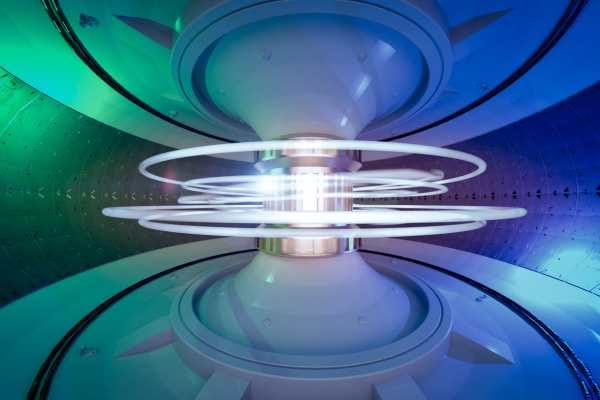
PlasmaLeap’s fertiliser hubs aim to enable just that: decentralised production of nitrogen fertiliser directly on farms or at local distribution centres. Its modular chemical microreactors use non-thermal plasma powered by electricity to synthesise chemicals and fuels.
The technology enables the production of ammonia and nitrate – which are the building blocks of most nitrogen fertilisers – using air, water and renewable electricity.
“This funding allows us to move from successful trials into real-world deployment, demonstrating how clean, decentralised fertiliser and chemical production can transform agriculture.”
In January, the company raised nearly $28 million in funding to accelerate its development and expand local production capability.
The Series A round was led by the Gates Foundation, Investible and Yara Growth Ventures, the venture investment arm of global fertiliser producer Yara International.
Additional investors include Twynam, GrainCorp Ventures, Uniseed/UniSuper, Artesian, Hort Innovation, GDRC, SVG Ventures and Agnition Ventures, part of New Zealand fertiliser cooperative Ravensdown.
The funding will support the rollout of fertiliser hubs in NSW and Tasmania, PlasmaLeap said, as well as further field trials with growers and continued development of its core reactor technology.
Its distributed model could complement existing supply chains while helping agriculture reduce emissions and improve fertiliser security, according to PlasmaLeap. The startup said it was also exploring longer-term applications in sustainable fuels and energy systems.
“The backing of these strategic and institutional investors is strong validation of both the PlasmaLeap technology and the scale of the opportunity,” PlasmaLeap CEO & co-founder Frere Byrne said.
“This funding allows us to move from successful trials into real-world deployment, demonstrating how clean, decentralised fertiliser and chemical production can transform agriculture, reduce emissions and guarantee sovereign security of critical resources like food and fuel.”
Zero mission
The global ammonia market, which underpins the nitrogen fertiliser industry, is valued at roughly US$69 billion per year and is projected to grow substantially over the coming decades.
Traditional nitrogen fertiliser production, however, is responsible for a significant share of global industrial emissions – around 2.5% of global CO2 emissions when manufacturing, transport, and field emissions after application are taken into account, according to International Fertiliser Association data.
PlasmaLeap’s approach, which allows fertiliser production to occur closer to where it is used and potentially at much smaller scales, also aims to reduce emissions as well as lowering transport costs and improving supply for farmers.
“PlasmaLeap has developed a breakthrough platform for fertiliser with lower CO2 emissions, delivering step-change improvements in energy efficiency,” Yara Growth Ventures investment director Stian Nygaard said.
“We see strong potential for this technology to scale competitively and reduce the climate impact of farming.”
PlasmaLeap develops modular chemical microreactors that use non-thermal plasma powered by electricity to synthesise chemicals and fuels with minimal emissions. The technology activates molecules from air and water using renewable electricity, enabling the production of nitrogen fertilisers such as ammonia, nitric acid, and nitrates without the fossil-fuel-intensive processes used in conventional plants. Compared to traditional large, high-temperature chemical facilities, PlasmaLeap’s reactors operate at lower temperatures and pressures and are small, scalable, and decentralised, allowing chemicals to be produced directly on farms or at industrial sites. This approach reduces transport requirements, lowers greenhouse-gas emissions, and enables on-demand production of fertilisers and other green chemicals, according to PlasmaLeap.