Fresh funds for future factory
This hyper-fermentation facility in Orange is gearing up to bring biomanufacturing into the mainstream.

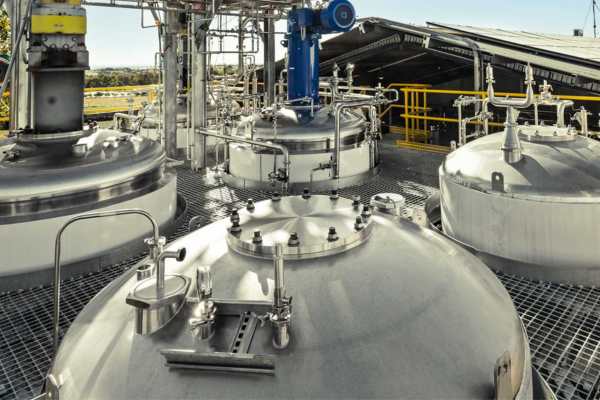
NSW startup Cauldron Ferm has raised $19m to scale its hyper-fermentation platform in a bid to fundamentally reshape industrial processing.
Cauldron’s continuous “hyper-fermentation” facility based in Orange is currently in pilot and it says the funding round will open the way for expansion into full-scale production amid growing interest in biomanufacturing.
According to Cauldron, continuous "hyper-fermentation" could solve many of the issues faced by traditional manufacturers by cutting production costs, easing supply chain issues and boosting output.
Biomanufacturing uses engineered microbes to convert simple inputs like sugars into valuable products and Cauldron says its key differentiator is its capability to keep the microbes in a productive and steady state over long periods.
Cauldron says its technology is based on decades of research and has now progressed from early validation to commercial proof points. The startup has recently appeared on Fast Company’s 2026 list of the World’s Most Innovative Companies and has been named a “Technology Pioneer” by the World Economic Forum for its potential to reshape manufacturing.
"In a market distracted by AI hype cycles, we’re backing the hard, physical work of scaling biology."
The technology and services at Cauldron's demonstration facility in Orange are already being applied across a wide range of industries, as innovative Australian startups seek to develop and scale food proteins and nutritional ingredients, cosmetics, materials, chemicals and fuels.
Recent collaborations include food pioneers Edenbrew and Nourish Ingredients as well as seaweed startup, Uluu and agtech Loam Bio.
Cauldron's series A2 funding round was led by Main Sequence Ventures and Phil Morle, a partner at the venture capitalist firm, said: "Hyper-fermentation closes the gap between breakthrough strains and reliable, cost-competitive production."
“In a market distracted by AI hype cycles, we’re backing the hard, physical work of scaling biology. That’s what builds enduring companies, and it’s why we believe Cauldron is at the forefront of making bioindustrial manufacturing commercially inevitable.”
Cauldron says the funding comes at a pivotal time for the industrial fermentation sector as demand for cost-competitive bio-production accelerates globally. The company says it has also secured government grants in both Australia and the US to support the expansion of its operations in Orange.
"For biomanufacturing to compete in industrial sectors, bioproducts have to deliver on costs, scale, and quality. Bioprocess innovation is how we get there."
Biomanufacturing has historically been limited to low volume, high margin applications like pharmaceuticals, according to Cauldron. It says the next challenge is to transform mainstream, high-volume sectors such as food and fuel.
Estimates suggest up to 60% of the physical inputs to the global economy could be produced biologically, fundamentally reshaping how essential products are sourced and secured, Cauldron says.
To this end, Cauldron claims to be the first company to demonstrate true industrial-scale continuous fermentation for synthetic biology strains at the 10,000-litre scale.
“For biomanufacturing to compete in industrial sectors, bioproducts have to deliver on costs, scale, and quality. Bioprocess innovation is how we get there,” Cauldron co-founder and CEO Michele Stansfield said.
“This milestone reflects the impact of our platform at a time when governments and corporations are urgently seeking competitive bio-based solutions to address supply chain pressure.”
Cauldron operates a 30,000-litre demonstration facility in the town of Orange in regional NSW, and works with local and global partners to optimise and scale fermentation processes across many sectors. Cauldron says it is the first to demonstrate industrial-scale continuous fermentation for synthetic biology strains at the 10,000-litre scale. It uses living cells as programmable factories, where bio-engineered microbes convert simple inputs like sugars into valuable products. By increasing output while reducing production costs, Cauldron says bioproducts have the potential to deliver a step-change in manufacturing efficiency.
Related stories
 Amanda Bryan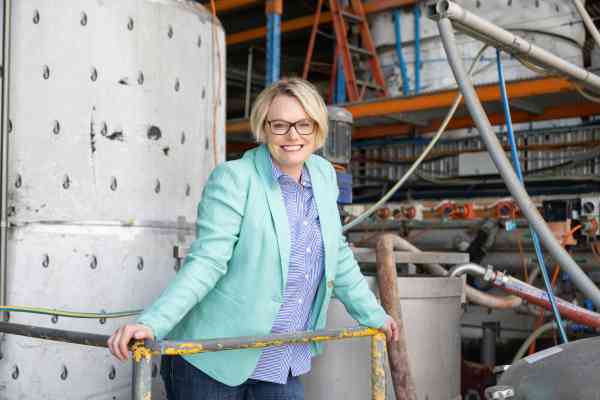
 Amanda Bryan