Rewriting the future of megafires
Blending ancient methods with smart technologies offers fresh hope in the battle to navigate tomorrow's bushfires.

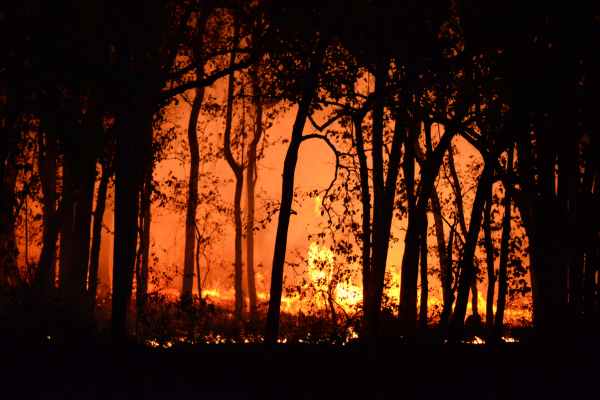
As these rare disasters become recurring events, ancient knowledge is pointing the way towards smarter fire adaptation and resilience.
It has been more than five years since Australia’s catastrophic Black Summer bushfires scorched vast areas of the country during an unprecedented 2019–20 fire season fuelled by extreme heat and prolonged drought.
In the second of our two-part series, we explore approaches old and new aimed at boosting preparation and resilience in the face of this escalating threat.
In addition to widescale devastation, nearly three billion native animals – including mammals, birds, reptiles and frogs – were killed or displaced by the fires, according to independent research commissioned by the World Wide Fund for Nature (WWF Australia).
“It’s hard to think of another event anywhere in the world in living memory that has killed or displaced that many animals. This ranks as one of the worst wildlife disasters in modern history,” WWF-Australia CEO Dermot O’Gorman said of the findings.
University of Sydney professor Chris Dickman, who oversaw the WWF research, said the study showed that mega fires were transforming the environment and accelerating the loss of native biodiversity.
Fighting fires with fire
Confronting such a threat requires a shift in thinking. One approach gaining renewed attention is cultural burning, or cool burning – a land-management practice developed and refined by Indigenous people over thousands of years, and it's regaining traction across vast tracts of Australia.
These burns are typically lit slowly in small sections at night or in the early morning when humidity and wind conditions are right. They are then closely monitored so only undergrowth is affected, allowing seeds and nutrients to remain intact and native animals to escape.
Recent studies have shown that unlike conventional hazard-reduction burns, these more frequent, low-intensity fires produce less heat which can play a role in improving soil health and controlling particular plant species.
They also play a large role in preventing bushfires according to a study published in CSIRO's International Journal of Wildland Fire, which revealed a dramatic reduction in late-season wildfires across nearly three-quarters of the North Kimberley following the revitalisation of cultural burns.
"If we can come together and combine our expertise, underpinned and led by the foundations of Indigenous Cultural Burning, then we have the best chance to turn this around."
Adding to the weight of research, a raft of successful indigenous cultural burning and land management projects are attracting government funding through the Natural Heritage Trust and from organisations such as WWF-Australia.
The Firesticks Alliance is an Indigenous-led network that has been working with Traditional Owners, community groups and landholders over the past ten years to re-invigorate the use of cultural burning by running on-country workshops and local burns.
“The challenge is so great, it is bigger than all of us and needs everyone to work together to tackle it," Tagalaka man and co-founder of Firesticks Victor Steffensen says. "If we can come together and combine our expertise, underpinned and led by the foundations of Indigenous Cultural Burning, then we have the best chance to turn this around.”
Last year Firesticks teamed up with partner organisations and graziers in Queensland for a project showcasing how traditional knowledge can be integrated into modern grazing practices, improving profitability and sustainability for Queensland farmers.
The Right-Way Desert Fire Project, led by the Indigenous Desert Alliance, is another initiative working to prevent the destruction caused by wildfire in Australia’s desert country. As one of the largest First Nations-led fire management programs in the world, it uses traditional cool fire to manage over 2.5 million hectares of desert country across several Australian states.
In northern Australia, The Nature Conservancy is working alongside Indigenous partners to manage burning of the tropical savanna ecosystem – a biodiversity hotspot – by replacing uncontrolled late dry-season fires with traditional early dry-season, controlled burns.
Another recently announced National Heritage Trust project will tap into local Elder advice and ecological assessment to protect critically endangered box-gum grassy woodlands in the north west of NSW, with the assessment of priority cultural burn sites already underway in consultation with First Nations communities.
Urban resilience
Working with nature to reduce future bushfire risk in rural and wildland areas that intersect with urban populations is also the subject of ongoing research.
In a recent study examining the effectiveness of green firebreaks in the wildland-urban interface, Greening Australia planted native species over 54 hectares to recreate the structure of open grassy Eucalypt woodland.
The researchers said: "When placed strategically in cleared or degraded areas, green firebreak plantings can reduce wind speeds and alter fuel structure in the landscape, ultimately to help slow fire spread, while also delivering benefits for biodiversity and carbon storage".
However, they said that the effectiveness of the green fire breaks varied by site, weather, and planting design and added that they should be used alongside other fire management strategies.
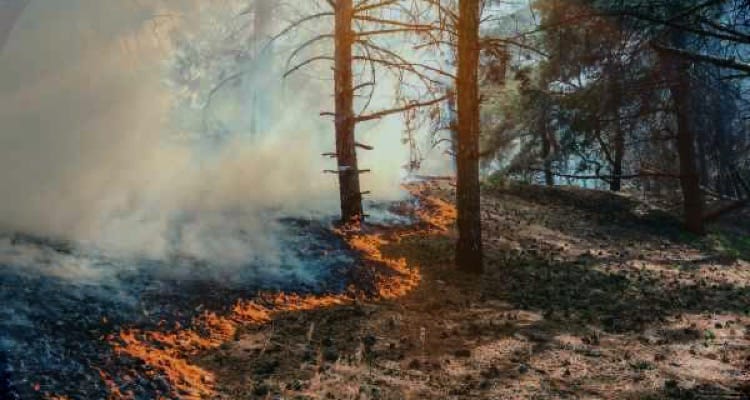
Sunshine Coast University PhD student Jady Smith is researching the use of water management methods in Queensland’s Noosa Shire to boost the effectiveness of green firebreaks by deploying stormwater and grey water to irrigate these areas, helping to manage thermal and moisture levels when bushfires strike.
The researcher is using CSIRO Spark software to analyse fire simulation scenarios across Noosa’s Wildland Urban Interface, both with and without irrigated green firebreaks.
Protecting the homefront
Many homeowners are left with little choice but to flee as urban bushfire incursions increase in frequency and severity. The CSIRO says that at least 85 per cent of homes lost in bushfires are destroyed by ember attack or low-level surface fire rather than direct exposure to flames from a bushfire front, and has published guidelines for homeowners seeking to reduce their risk.
"Even if your house doesn’t directly border bushland, it is still important you do everything you can to safeguard it," the CSIRO says.
While experts say there is no silver bullet to protect homes from exposure to a high-intensity blaze, Australian innovators are introducing new tools to help homeowners add some layers of protection in their absence.
A common area of vulnerability for homes under ember attack is roofs and gutters. Blue Mountains-based startup, Fire Halo Building Protection, has developed a system that it says can automate the process of sealing roof downpipes, then deploy them as conduits to flood the gutter network with water from a tank or mains supply, creating a continuous, ember-suppressing barrier along the roofline.
"Even if your house doesn’t directly border bushland, it is still important you do everything you can to safeguard it."
Another common defence against ember attack is the use of a sprinkler system to keep surfaces damp to repel embers and grass fires.
South Australian company, Embarr, has shifted this concept a step further with a system that it says can provide continuous environmental monitoring of conditions to identify bushfire threats from embers, radiant heat, and approaching fire fronts.
By deploying sensors that can detect flames up to 250 metres away, Embarr says the system can automatically trigger household sprinklers, controlling the rate of water use and pump fuel consumption for extended operation before, during, and after a fire front passes.
Tackling embers from a different angle is Firecoat, a fire-retardant paint range developed by NSW-based Flame Security International (FSI) in partnership with scientists from the University of New South Wales (UNSW).
FSI says it developed its Firecoat polymer technology to withstand ‘very high risk’ fire conditions and its range includes both exterior and interior fire-retardant house paints as well as a range of barrier sprays for homes and surrounding vegetation.
One of these is Firecoat Defend, a powder that FSI says can be mixed with water and sprayed on combustible vegetation like grass, bushes and dry leaves to form a protective 'char' layer that helps limit a fire front’s approach.
Lessons from the front
Bushfire education isn’t just about conquering fire, but boosting resilience, knowledge and preparation.
Training firefighters to respond to extreme, high-risk scenarios without exposing them to physical danger is now being made possible by an array of virtual reality and simulation technologies.
Australia’s FLAIM Systems has developed immersive virtual reality (VR) training environments designed to prepare firefighters for the extreme conditions of bushfires, simulating a range of scenarios rolled out via a VR training headset.
According to FLAIM, these simulations place participants in realistic, high-pressure scenarios that test decision-making, communication and risk assessment, while allowing crews to safely practise critical procedures that could prove lifesaving in real emergencies.
The VR scenarios include a burnover event in which firefighters must carry out rapid readiness procedures from inside a fire truck, ember attacks and grassfire simulations that focus on property protection, as well as hose handling and dynamic response to fast-moving fire conditions.
Fire up close
From headsets to the big screen, a new immersive cinema experience aims to help scientists, firefighters, and ordinary people across Australia understand the behaviour of bushfires.
Developed by UNSW’s iCinema Research Centre, the iFire platform offers an immersive, 3D simulation of extreme fire events, designed to allow viewers to experience their unpredictable nature at full scale in a safe, virtual environment.
As well as bringing bushfires to life for everyday people, the iFire 1.0 platform is also being developed as a training platform for firefighters, launching a five-year collaboration with Fire and Rescue NSW (FRNSW) last year.
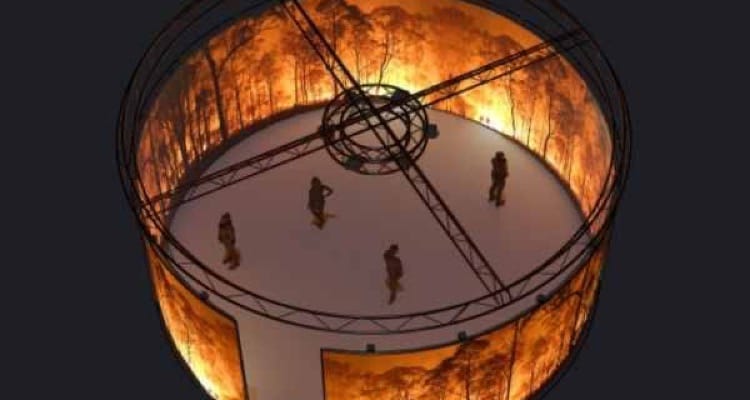
According to UNSW, iFire version 2.0 aims to extend these capabilities with a custom AI model to simulate extreme-danger fires and allow users to adjust variables such as wind speed and direction to see how fire behaviour changes in real time.
The system will also be accessible across multiple platforms from large-scale 3D cinemas and virtual production stages to headsets, laptops and tablets, UNSW said, allowing researchers, emergency responders and residents to share the same virtual fireground simultaneously.
NSW Emergency Services Minister Jihad Dib said the initiative would transform emergency preparedness. “This technology can effectively put our firefighters in the centre of a simulated fireground or other emergency, allowing them to develop important incident response skills and prepare for the real thing.”
The UNSW Ignite experience will be on show in Canberra for the upcoming Enlighten festival running 27 February to 9 March.
▸ In part one of our bushfire series, we explored new fire detection and monitoring technology being developed to help mitigate catastrophic fires.
 Louisa Hearn